Vibe Coding - Volver app
Recently, I’ve been experimenting with AI-driven development tools to bridge the gap between design and functional code.
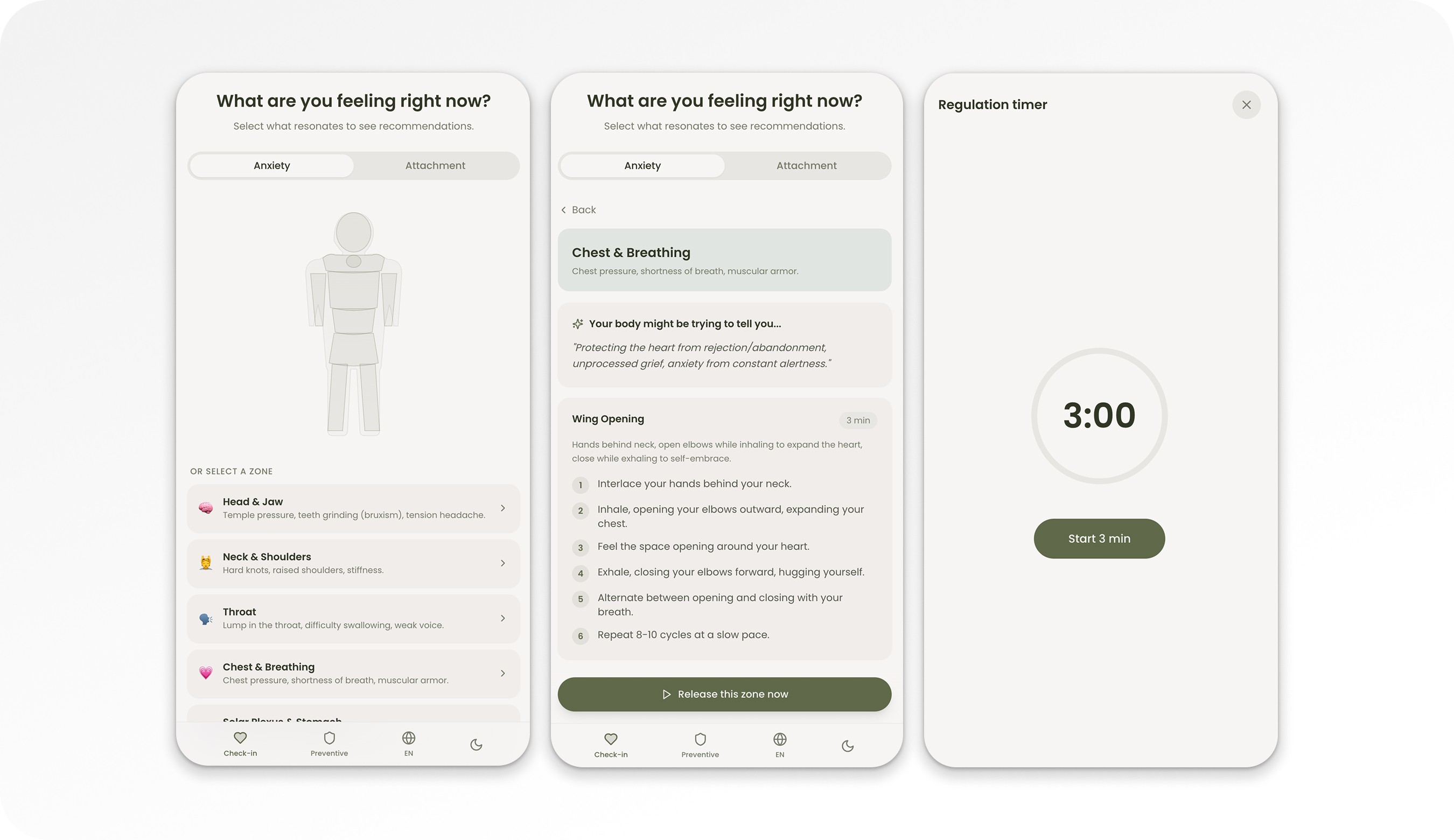
Volver is an experimental mental wellness app I have designed and built using Lovable, centered on a concept that's very close to my own inner work: rather than tracking mood after the fact, it helps users catch anxiety early through somatic body scanning identifying where tension is showing up physically (jaw, chest, breath) before the emotional crash hits and responds with micro-regulation exercises tailored to the nervous system in that moment. It also integrates attachment theory so users can understand their relational patterns and self-regulate before those patterns get triggered, making it less of a "calm down" tool and more of a genuine self-awareness system built on the same somatic and attachment frameworks you personally engage with.
The concept started from a simple but very real problem: most people don’t realize they’re anxious until they’re already overwhelmed. So instead of tracking mood after the fact, I focused on early somatic awareness, what your body is trying to tell you before the emotional crash.
The result is a somatic scanning tool that helps users identify where anxiety is showing up physically (chest tightness, jaw tension, shallow breathing, etc.) and translates those signals into actionable micro regulation exercises to regulate the nervous system during moments of anxiety.
Check out the last version here: https://volver.lovable.app 🌱
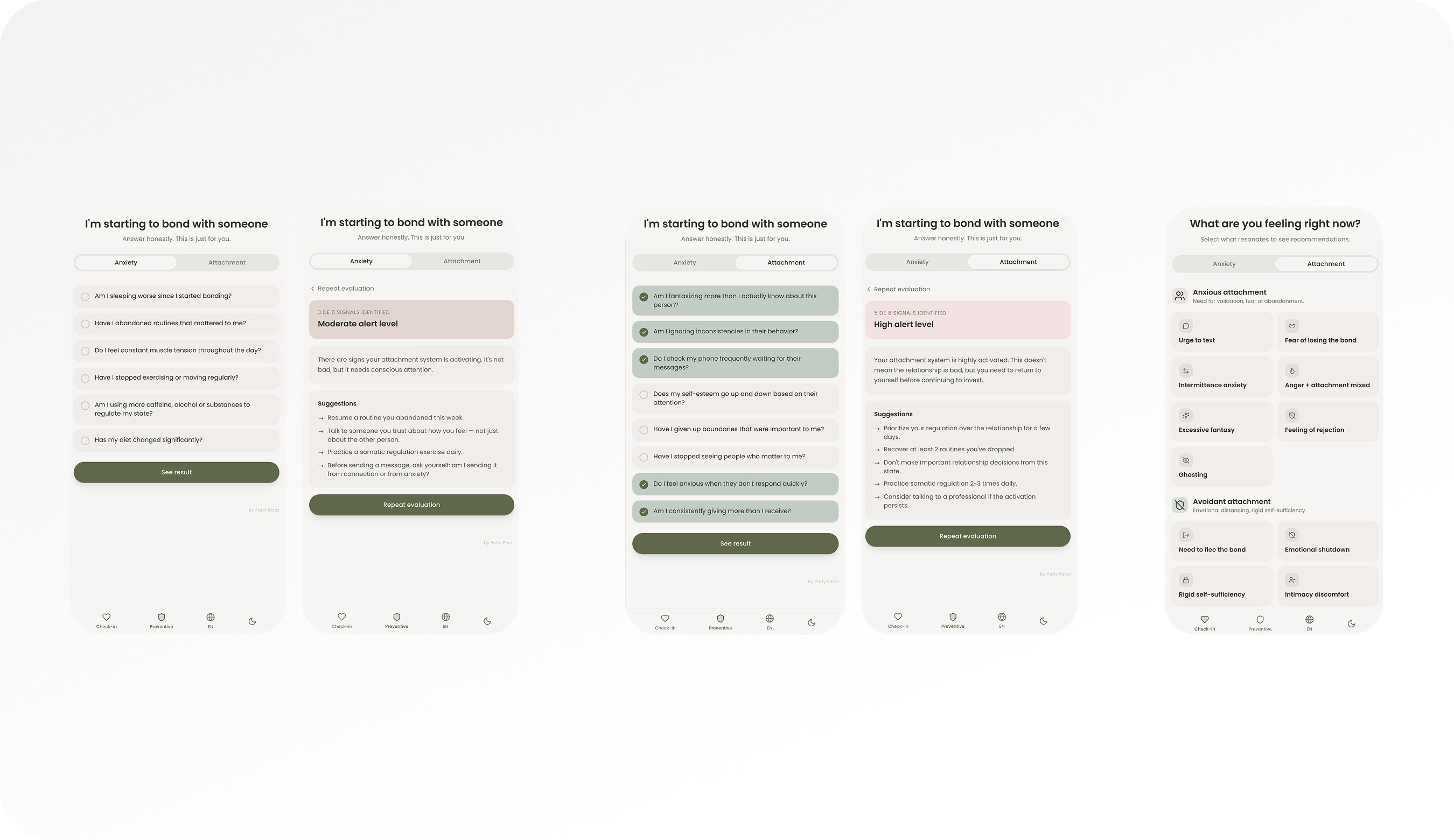
I also integrated attachment theory frameworks into the experience:
Users can identify their attachment style (anxious, avoidant, secure…)
The app adapts regulation tools based on emotional patterns
It helps users self-regulate before triggering relational patterns
So it’s not just “calm down”, it’s “understand why your nervous system is reacting like this and what to do about it in real time.”
Using Lovable, I was able to:
Rapidly prototype and iterate the experience in real time
Turn UX flows into a working product without heavy engineering
Validate interaction patterns quickly (scan flows, feedback loops, microcopy)
🚀 The Lovable Experience
I started building the app with Lovable. Their interface is incredibly intuitive and acts as a fantastic "middleman" between design intent and raw code. It’s highly accurate, delivering exactly what the prompt asks for and surprisingly, it has really "good taste," leveraging its built-in UI libraries beautifully to create cohesive designs.
The downside?
The free version limits how many prompts you can do per day, and there is absolutely no visibility into how many tokens or requests you have left. You are essentially flying blind until you suddenly hit a wall and run out.
🤖 The Claude Experiment
To compare, I decided to pay the subscription to really put Claude to the test.
My initial test was coping the original HTML files from Lovable, feed them to Claude locally, and build from there. At first it replicated the initial design exactly (you can see that staged version here:https://lnkd.in/eYxgZcNW), but the biggest friction point I found was consistency. As I started introducing new prompts to build out features, the style started changing drastically. Even when I pasted the exact same prompt into both, Claude's UI shifted and looked entirely different with every refinement.
🏗️ Next Steps
Right now, the app is staged on Netlify (for Claude version), but I’m holding off on the final deployment until I’m 100% satisfied with the polish and the results.
Building this has definitely been a steep but rewarding learning curve it really feels like taking one massive step into the future of how we will design and build software.